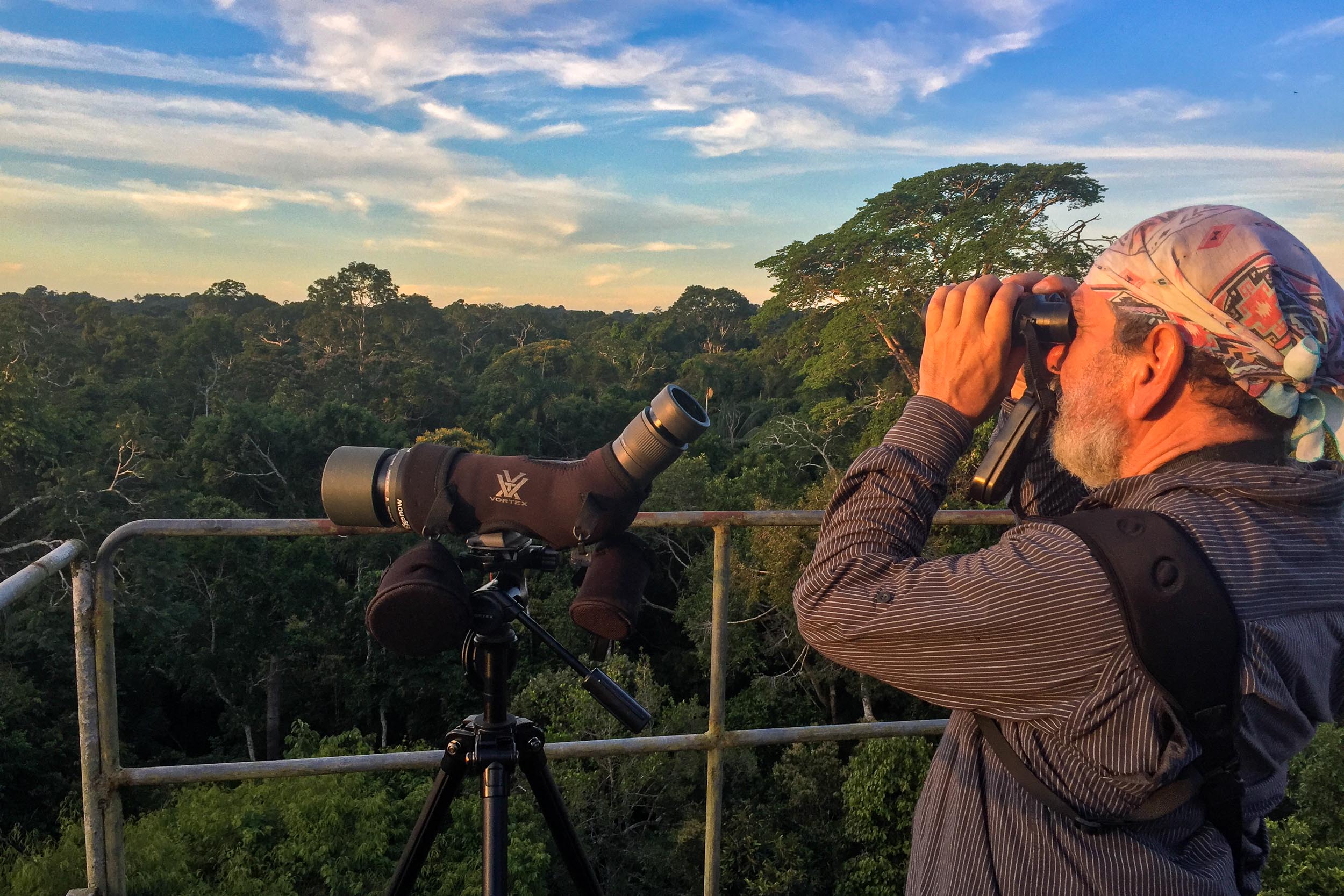
Peru is extraordinarily geographically varied, from the humid depths of the Amazon rainforest to the coastal deserts shaped by the cold waters of the Humboldt Current, from the freezing heights of the Andes to the mangrove forests of the northern coast.
One of the most remarkable things about birding in Peru is the remarkable altitude gain from the capital city of Lima up into the Andes. In just 150 km from the sea-level capital, you reach 5,000 masl in the windswept heights of the puna. In less than five hours of driving along winding roads out of Lima, you can travel from the waters of the Pacific Ocean to the high-altitude bogs of the Andes. And while it’s typically not advisable to gain so much altitude in such a short amount of time, many birders do precisely that on a quest to spot two unique birds living up in those remote mountain passes: the Diademed Sandpiper-Plover and the White-bellied Cinclodes.
Chasing Two High-Andean Treasures
During my first few days in Peru, I knew I had to make the same journey. After all, those two species were among my top targets in Peru. While the Diademed Sandpiper-Plover has a reasonably widespread, if remote, range from Peru south through Bolivia, Chile, and Argentina, the cinclodes is critically endangered and only found in a small region of the Andes. If I wanted to see both of these extraordinary birds, I would need to brave the altitude and get myself to the Marcopomacocha Pass, where both birds are reliably spotted.

The Climb Begins: Leaving Lima for the Andes
I set off before dawn with some birding friends. Despite Lima’s notoriously bad traffic, we escaped the city relatively quickly, and before long, we were winding up through the Andean foothills on the outskirts of the metropolitan area. We had opted to make the trip over two days to give ourselves more birding time on the drive. We took the longer route along an unpaved road via Huachupampa. This route offers some excellent birding hotspots for several Peruvian endemics and near-endemics.
Birding the Huachupampa Route: Endemics Galore
During a long day, I ticked off Great Inca Finch, Rufous-breasted Warbling Finch, Rusty-bellied Brushfinch, and some nice hummingbirds, including Oasis Hummingbird, Purple-collared Woodstar, Peruvian Sheartail, Black Metaltail, and Bronze-tailed Comet.
Unfortunately, a flat tire put paid to the late-afternoon birding, and we rolled into the roadside town of San Mateo well after dark. My single bed in a roadside hotel had never looked so good. Still, a 13-lifer day to kick off my time in Peru can’t be sniffed at!

Marcopomacocha Pass: Welcome to the High Andes
We rose early the following day to get the tire patched, then rolled out of town to the Marcopomacocha Pass. After a brief but rewarding roadside stop, where we had excellent views of a pair of Torrent Ducks and their young chick, we reached the cold, high Andean bogs where our two targets—hopefully—awaited. We strode across the muddy ground, periodically stopping to scan for our first target, the Diademed Sandpiper-Plover. I flushed a Puna Snipe, and an Olivaceous Thornbill hummingbird fed at my feet on tiny red pinprick flowers. I’ve never seen a hummingbird feed so exclusively on the ground, and I watched this fascinating behavior for a while before a muted shout in the distance snapped me out of it.

A Dream Realized: Encounter With the Diademed Sandpiper-Plover
My companions had spotted the sandpiper-plover, and I moved as fast as the 4,800 m air would allow! There was no need to worry, though; these delightful little shorebirds weren’t overly concerned about our presence, and they weren’t going anywhere. Even as a birder with an affinity for shorebirds, I had to admit that these beauties were a class apart: the jet-black head and contrasting white diadem, the rusty-red nape, and finely barred black-and-white underparts combined to create one truly smart little bird. We watched a family of three scuttling through the boggy vegetation, stopping to perform their odd head-bobbing alert motion and feeding in the shallow marshes. I couldn’t wipe the smile off my face. I had dreamed of seeing this bird for a very long time.

A Rarity Among Rarities: Finding the White-Bellied Cinclodes
Eventually, I tore myself away, and we jumped in the car and drove further into the mountains to the preferred habitat of the second target bird, the White-bellied Cinclodes. I hadn’t been above 5,000 m in a while and was nervous about how my body would handle it, especially since I had come from sea level only 24 hours earlier. Thankfully, a bit of a headache was the worst of it, and I could walk down comfortably from the road to the edges of the curious, cushion-like plants where the cinclodes live.
I quickly spotted a large bird with telltale white wing flashes flying off in the distance. The cinclodes! We crept closer into the valley and enjoyed excellent scope views of three cinclodes feeding along the valley floor. They were slightly skittish and wouldn’t let us get too close, so I was grateful for my scope. It would be fair to say that most cinclodes species aren’t exactly a feast for the eyes—they tend toward a brown color with some paler parts. But this species really bucks the trend, with its crisp white underparts and handsome gray and chestnut back. They are also much bigger than most of their cousins.

Reflections From the Roof of the World
In short, it was a magnificent bird, made even more special by its rarity. Sadly, habitat loss has this species at a critical point, and each sighting is special. I felt privileged to briefly share this thin, freezing air with them and was genuinely impressed that they could live in such extreme conditions. It bears repeating: birds are exceptionally remarkable creatures, and every encounter with them is worth savoring. The colorful tanagers and toucans might be the scene-stealers, but birds like the White-bellied Cinclodes are the true stars of the show in my book.

From Ocean to Andes and Back Again
We drove back down to Lima a bit earlier than planned, one eye on the city’s rush-hour traffic. Thankfully, we beat it, and I was back at sea level by sunset. As I wrote at the start of this blog, Peru’s geography is pretty mind-boggling, and this mad trip from the shore of the ocean to the high Andes and back just brought that home to me. Was it worth it? With two of Peru’s best birds seen, how could it not be?!
If you are interested in a birding tour in Peru, get in touch with our travel experts, and let’s make it happen!
By Chris Bell, who isn’t that fond of canasteros, but loves a good cinclodes!