Your travel expert
Chris Bell
Birdwatching guide and travel advisor

 https://birding-experience.com/wp-content/uploads/2025/10/Chili-Tourco-gorge-blanche-Scelorchilus-albicollis-White-throated-tapaculo-FD-016-1240x700.jpg
This 14-day birding adventure crosses Chile’s spectacular landscapes from north to south, revealing an incredible diversity of habitats — from high plateaus and snow-capped volcanoes to vast Andean valleys and rugged Patagonian ranges. Beyond the mountains, we explore the rich Pacific coast, the driest desert on Earth, and vibrant coastal wetlands, not to mention exciting pelagic outings.
This is Chile’s most comprehensive birding itinerary, spanning the country’s extraordinary range of habitats — from the Atacama Desert to the temperate forests of the south — and offering an in-depth journey through some of South America’s most dramatic and varied scenery, including the high Andes, the Pacific coast, and the unique Mediterranean scrublands. Highlight species include the Chilean Woodstar, Diademed Sandpiper-Plover, Inca Tern, and the majestic Andean Condor, as well as a remarkable selection of Chile’s endemic birds, particularly among the elusive Tapaculos. Pelagic trips provide opportunities to observe albatrosses, temperate forests shelter the world’s southernmost parrots, and even the desert harbors rare and endangered hummingbirds.
Birding across Chile offers one of the continent’s most complete bird lists, with comfortable accommodations set in stunning natural settings, fine cuisine, and award-winning wines. Passionate and proud of its natural heritage, we look forward to sharing Chile’s rich natural history with you.
This tour can be combined with our “Destination Patagonia” extension, allowing you to complete your bird and wildlife observations in the heart of southern Patagonia and search for the elusive Puma in Torres del Paine National Park.
 Bird photo tours
 Birdwatching tours

Arrival in Santiago de Chile and transfer to a hotel near the airport. Rooms will be available from around 3:00 p.m. In the evening, your naturalist and birding guide will meet you at the hotel for a detailed presentation of the itinerary, a day-by-day review of the program, and to answer any logistical or natural history questions before the start of your adventure.
Private transport, bilingual birding guide, dinner, overnight stay.
Early in the morning, we’ll take a flight from Santiago to Arica, a city located near the Peruvian border. This region, known as the “Far North,” encompasses the vast Atacama Desert as well as the high-altitude Andean steppe, or Altiplano. Although it is the driest desert on Earth, birding here is made possible by the rivers and small streams fed by the melting snow of the High Andes, which create fertile valleys and lush wetlands — true oases in this otherwise harsh environment.
After an initial birding exploration around Arica, we’ll make several stops en route through the surrounding agricultural areas before continuing toward the small Andean town of Putre. Along the way, we’ll look for several remarkable species, including Peruvian Thick-Knee, West Peruvian Dove, Croaking Ground-Dove, Groove-billed Ani, Burrowing Owl, Andean Swift, Peruvian Elaenia (the northern form of the White-crested Elaenia), Vermilion Flycatcher, the local race of Bran-colored Flycatcher (a probable future split), Cinereous Conebill, Chestnut-throated Seedeater, Blue-black Grassquit, Slender-billed Finch, Peruvian Meadowlark, and many more.
After a full day of birding, we’ll reach the beautiful village of Putre, located at an altitude of 3,500 meters. This charming Andean settlement will serve as our base for exploring the high-mountain ecosystems the following day.
Private transport, bilingual birding guide, all meals, overnight stay.
In the heart of the Altiplano of northern Chile, about 50 kilometers from Putre, lies Lauca National Park, a site of exceptional natural beauty. Designated in 1981 as part of UNESCO’s World Network of Biosphere Reserves, the park is dominated by the snow-capped Pomerape and Parinacota volcanoes, whose summits rise above 6,300 meters. Their majestic silhouettes are reflected in the deep blue waters of Lakes Chungara and Cotacotani, the park’s most iconic landmarks. Lake Chungara, the true highlight of the day, is considered one of the highest lakes in the world.
These high-altitude landscapes harbor several emblematic Andean species, such as the Andean Grebe (local form of the Silvery Grebe), Puna Teal, Giant Coot, and Andean Gull, along with a variety of more widespread ducks. As we ascend toward the lakes, we’ll scan the bofedales (high Andean wetlands) in search of the spectacular and rare Diademed Sandpiper-Plover. Other key species we may encounter include Puna Rhea, Andean Flicker, White-winged Cinclodes, Black Siskin, Puna Tinamou, Puna Ibis, Andean Goose, Mountain Caracara, Andean Lapwing, Puna Plover, Andean Avocet, Puna Miner, Puna Ground-Tyrant, White-fronted Ground-Tyrant, Andean Negrito, Glacier Finch, and White-throated Sierra-Finch.
The lakes themselves often host impressive groups of flamingos, and with some luck, we may observe all three species found in the region: Chilean Flamingo, Andean Flamingo, and Puna (James’s) Flamingo. After this unforgettable day of birding amid breathtaking scenery, we’ll return to our accommodation in Putre for a well-deserved evening of rest.
Private transport, bilingual birding guide, all meals, overnight stay.
We’ll dedicate the morning to birding around the small Andean village of Putre, nestled in the heart of the mountains. In these bright, arid landscapes, we’ll search for several emblematic species of the region, including Bare-faced Ground-Dove, White-throated Earthcreeper, Yellow-billed Tit-Tyrant, Canyon and Dark-winged Canasteros, Blue-and-Yellow Tanager, Cream-winged and White-winged Cinclodes, Streaked Tit-Spinetail, D’Orbigny’s and White-browed Chat-Tyrants, Chiguanco Thrush, Black-throated Flowerpiercer, Golden-billed Saltator, Black-hoodedand Ash-breasted Sierra-Finches, Greenish Yellow-Finch, Band-tailed Seedeater, and Spot-winged Pigeon.
In the alfalfa fields on the outskirts of the village, we’ll also try to spot the shy but often vocal Ornate Tinamou, a notoriously difficult species to observe.
Around midday, we’ll begin our gradual descent toward Arica, following the winding road through Andean valleys while keeping a lookout for any species we may have missed on our way up to Putre.
Overnight in Arica.
Private transport, bilingual birding guide, all meals, overnight stay.

This day will be devoted to searching for the hummingbirds of northern Chile — true jewels of the coastal desert. Our main targets will be the Oasis Hummingbird, Peruvian Sheartail, and the endemic — but sadly critically endangered — Chilean Woodstar, whose global population is estimated at only about 350 individuals.
To look for this iconic species, we’ll head south to the Camarones Valley, which harbors the largest remaining population of Chilean Woodstars. In this same valley, participants will also have the opportunity to observe several other notable species, such as the Pied-crested Tit-Tyrant, Tamarugo Conebill, and Raimondi’s Yellow-Finch, recently recorded for the first time in Chile.
After lunch, we’ll continue our journey south toward Iquique, following the stark and dramatic landscapes of the Atacama Desert.
Overnight in Iquique.
Private transport, bilingual birding guide, all meals, overnight stay.
The day begins with a six-hour pelagic excursion in the productive waters of the Humboldt Current, one of the richest marine ecosystems on Earth. This cold current attracts an incredible diversity of seabirds, bringing together both subantarctic species and petrels from warmer waters.
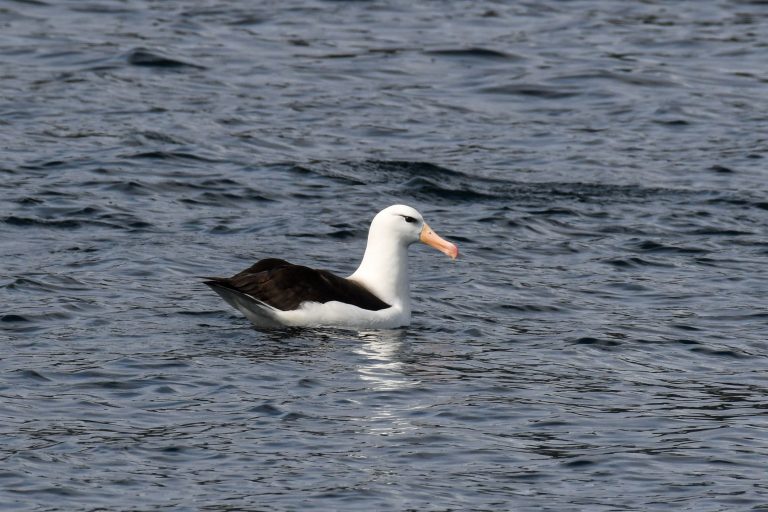
During this outing, we can expect to see several spectacular species such as Salvin’s, Buller’s, and Black-browed Albatrosses, Northern Giant-Petrel, White-chinned and Westland Petrels, Sooty Shearwater, and the tiny Elliott’s and Markham’s Storm-Petrels. We’ll also search for the rare Peruvian Diving-Petrel, Humboldt Penguin, Chilean Skua, and the elegant Swallow-tailed Gull.
As we return toward the coast, we’ll enjoy views of Red-legged and Guanay Cormorants, the striking Inca Tern, as well as Peruvian Booby and Peruvian Pelican.
In the afternoon, we’ll take our flight back to Santiago.
Overnight in Santiago.
Private transport, bilingual birding guide, all meals, overnight stay.
Central Chile is one of the world’s five Mediterranean ecoregions, characterized by cold, rainy winters and hot, dry summers. Bordered by the high Andes to the east, the Atacama Desert to the north, and the Pacific Ocean to the west, this isolated region has fostered an exceptional rate of endemism in both flora and fauna, earning it a place among the world’s 25 biodiversity hotspots.
For our first full day in the Santiago region, we’ll explore the Mediterranean scrublands of the Andean foothills before ascending toward alpine habitats, making stops at different elevations along the way. We’ll search for several high-mountain specialists such as Greater Yellow-Finch, Creamy-rumped Miner, and White-sided Hillstar, along with other emblematic Andean species. During lunch, it’s not uncommon to see Andean Condors soaring majestically overhead, while Rufous-banded Miner, Gray-hooded Sierra-Finch, and Greater Yellow-Finch often approach curiously in search of crumbs. We’ll also watch for Variable Hawk, Black-chested Buzzard-Eagle, and Mountain Caracara.
In the surrounding hills, we’ll focus on six Chilean endemics: Chilean Tinamou, Moustached Turca, White-throatedand Dusky Tapaculos, Crag Chilia, and Dusky-tailed Canastero. This day offers a perfect introduction to the birds of central Chile, combining both common and local specialty species amid spectacular mountain scenery easily accessible from Santiago.
Overnight in Santiago.
Private transport, bilingual birding guide, all meals, overnight stay.
Early in the morning, we’ll leave Santiago and head toward the coastal city of San Antonio, the starting point for a full day of birding along Chile’s Pacific shoreline. Just south of town, we’ll visit a recently established reserve at the mouth of the Maipo River, one of central Chile’s most important wetlands. Here we can expect to see large gatherings of gulls, Black Skimmers, terns, pelicans, and many shorebirds. The reedbeds near the entrance of the reserve offer excellent chances to spot the brilliantly colored yet often elusive Many-colored Rush-Tyrant, along with Wren-like Rushbird, Yellow-winged Blackbird, and Sedge Wren. While walking along the beach, we’ll scan the sea for Red-legged and Guanay Cormorants, Peruvian Boobies, and perhaps even a few Chilean Skuas.
After scanning the mudflats for migratory shorebirds and possible rarities, we’ll turn our attention to passerines, looking for the rare Ticking Doradito (a recent split from Warbling Doradito), Spectacled Tyrant, Correndera Pipit, and two Chilean endemics — Dusky Tapaculo and Dusky-tailed Canastero.
Continuing north, we’ll stop for lunch at a seaside restaurant — an excellent spot to observe the endemic Chilean Seaside Cinclodes. In the afternoon, we’ll explore additional protected wetlands in search of Spot-flanked Gallinule, Black-necked and Coscoroba Swans, Plumbeous Rail, Black-headed Duck, and perhaps the very secretive Stripe-backed Bittern. We’ll also visit a Peruvian Pelican colony, where a few Humboldt Penguins breed.
Overnight in Valparaíso.
Private transport, bilingual birding guide, all meals, overnight stay.
We’ll depart just before sunrise for an exciting six-hour pelagic expedition, heading about 20 km offshore into the nutrient-rich waters of the Humboldt Current. With over 4,000 kilometers of coastline, Chile ranks among the world’s premier destinations for seabird observation. The upwelling phenomenon created by this cold current sustains extraordinary marine life and, consequently, an impressive diversity of seabirds.
During this voyage, we may record up to sixty species, as seen on previous trips, including more than half a dozen species of albatross. Regular sightings include Salvin’s, Black-browed, Northern Royal, and Southern Royal Albatrosses, while Buller’s and Chatham Albatrosses occasionally join the list. Other notable tubenoses include Masatierra, Juan Fernández, White-chinned, and Westland Petrels, as well as Peruvian Diving-Petrel, Northern Giant-Petrel, and Wilson’s Storm-Petrel (including the local Fuegian subspecies).
Closer to shore, we may encounter Red Phalarope, Guanay and Red-legged Cormorants, Kelp Gull, and South American Tern. Upon returning to port, we’ll enjoy a well-earned lunch before continuing our coastal birding north of Valparaíso, searching for the rare and elusive Stripe-backed Bittern and other coastal species we may have missed earlier.
Return to Santiago for the night.
Private transport, bilingual birding guide, all meals, overnight stay.
The Yeso Valley is renowned as one of the most accessible places to observe the fascinating and elusive Diademed Sandpiper-Plover. This stunning and enigmatic high-Andean shorebird breeds in the valley’s alpine bogs and will be our main target for the day. Our local guides have conducted a long-term research project on this species, giving us an in-depth understanding of its behavior and an excellent success rate for sightings.
In addition to the Sandpiper-Plover, many other interesting species can be found along our route as we gain altitude. Highlights include the Chilean endemics Crag Chilia and Moustached Turca, as well as Torrent Ducks navigating the rushing mountain streams. We’ll also look for typical Andean birds such as White-sided Hillstar, Andean Goose, Scale-throated Earthcreeper, Black-fronted and White-browed Ground-Tyrants, Greater Yellow-Finch, Yellow-rumped Siskin, the majestic Andean Condor soaring overhead, and the striking Mountain Caracara.
At higher elevations, we may encounter more localized and rare species such as Creamy-rumped Miner and Grey-breasted Seedsnipe. The scenery here is truly breathtaking — with towering peaks, turquoise lakes, hanging glaciers, and roaring rivers creating an unforgettable mountain setting.
In the afternoon, we’ll make our way back to Santiago for the night.
Private transport, bilingual birding guide, all meals, overnight stay.
Today we’ll drive south toward Talca, then continue on to Lake Colbún. Still within the heart of Chile’s arid Mediterranean zone, our main targets will be the spectacular, colorful, and noisy Burrowing Parakeet, along with the elegant Spectacled Duck.
Upon arrival at the lake, we’ll scan the shores for various species of ducks and grebes, while keeping an eye out for Spectacled Tyrant and Andean Gull. We’ll then continue to the northern end of the lake to spend the afternoon—and the following day—exploring the beautiful Altos de Lircay National Reserve.
At dusk, we’ll set out in search of the elusive and secretive Rufous-legged Owl, before settling in for the night at a peaceful and comfortable forest lodge in Vilches, just outside the reserve.
Private transport, bilingual birding guide, all meals, overnight stay.
Located at the southern limit of Chile’s Mediterranean region, this reserve lies within an ecotone — a transition zone between two distinct biomes — where dry Mediterranean scrub meets the lush temperate Nothofagus forests. Here, we’ll encounter a unique blend of bird communities representing both environments.
At Altos de Lircay, we’ll meet our first forest specialists. As we walk along the trails, participants will be captivated by the towering mature Nothofagus trees, lush ferns, moss-covered trunks, and the characteristic birdlife of southern South America. The area also features fascinating geological formations, adding another layer of interest to our exploration.
We’ll spend the entire day immersed in the vast forests of Altos de Lircay, listening for the distinctive nasal calls of the Chestnut-throated Huet-Huet, Chile’s least-known Tapaculo. We’ll also look for other specialties of the Nothofagus forests, such as the Austral Parakeet — the southernmost parrot in the world — the explosive-calling Chucao Tapaculo, the Magellanic Tapaculo, and the colorful Patagonian Sierra-Finch.
This will be our first opportunity to see the spectacular Magellanic Woodpecker, and we’ll also have a chance to spot the rare and secretive Chilean Hawk and White-throated Hawk. By late afternoon, we’ll return to our comfortable lodge in Vilches for the evening.
Private transport, bilingual birding guide, all meals, overnight stay.

After breakfast at our hostería, we’ll head south toward Temuco, the capital of the Araucanía Region. Along the way, we’ll make several stops in open grasslands and agricultural areas, scanning for species typical of these habitats, such as the Screaming Cowbird, Hellmayr’s Pipit, and the shy Chilean Tinamou. As we approach Temuco, the Mediterranean landscape will gradually give way to the lush temperate rainforests that define southern Chile.
Upon arrival, we’ll explore the Cerro Ñielol Natural Monument, a small but rich protected area that shelters a variety of forest specialists. Here, we’ll search for elusive species of the dense understory, such as the Black-throated Huet-Huet, Des Mur’s Wiretail, Chucao Tapaculo, and Ochre-flanked Tapaculo, as well as the near-endemic Slender-billed Parakeet, often found feeding noisily in the treetops. The surrounding forests also provide a good chance to encounter the rare Rufous-tailed Hawk, a majestic raptor of southern Chile’s woodlands.
Overnight in Temuco.
Private transport, bilingual birding guide, all meals, overnight stay.
In the morning, we’ll explore the high-elevation mixed forests of Nothofagus and Araucaria (monkey puzzle trees), set amid a landscape of dramatic mountains and volcanic peaks. These ancient forests, remnants of a prehistoric world, are home to a remarkable array of southern Andean bird species. Our main targets include the recently split Patagonian Forest Earthcreeper, Magellanic Tapaculo, Austral Parakeet, Striped Woodpecker, Chilean Flicker, and the agile White-throated Treerunner, as well as other characteristic birds of the Andean temperate forest.
This day will be as much about the joy of birding as about immersing ourselves in the primeval beauty of these majestic woodlands. The towering silhouettes of the Araucarias, framed by snow-capped volcanoes and rolling Andean ridges, create one of the most iconic and awe-inspiring landscapes in Chile.
After a full day of exploration and birding, we’ll transfer to Temuco Airport for an evening flight back to Santiago.
END OF OUR SERVICES.
Private transport, bilingual birding guide, breakfast and lunch.
14-day birding tour - Prices and dates of upcoming departures
| Prices and departure dates | 2 travellers | 4 travellers | 6 travellers | 8 travellers |
|---|---|---|---|---|
Prices 2026 | - | 8 360 | 6 570 | 5 710 |
Prices 2027 | - | 8 780 | 6 890 | 5 995 |
Are you a group of travellers looking for a special price, a specific departure date, or would you like to change this itinerary?
Customise this trip Contact usIncluded
Not included
Payment and reservation terms
To confirm your booking for the Chile tour, please send written confirmation of your agreement to Nature Experience’s local agent.
Cancelation terms
All cancellations must be submitted in writing, clearly indicating the booking reference of the trip to be canceled.
For any cancellation made more than 90 days before the start of the trip, a 10% penalty of the total trip cost (excluding internal flights) will apply, plus 100% of the flight costs, with a minimum fee of USD 200.
For cancellations made between 90 and 46 days before the start of the trip, a 30% penalty of the total trip cost (excluding internal flights) will apply, plus 100% of the flight costs.
For cancellations made between 45 and 31 days before the start of the trip, a 50% penalty of the total trip cost (excluding internal flights) will apply, plus 100% of the flight costs.
For cancellations made between 30 and 8 days before the start of the trip, a 80% penalty of the total trip cost (excluding internal flights) will apply, plus 100% of the flight costs.
For cancellations made less than 8 days before arrival in Ecuador, a 100% penalty of the total trip cost per person will apply.
In the case of a cancellation by one participant on a group trip, the final trip price for the remaining participants will be adjusted proportionally according to the new number of confirmed travelers. Depending on the reason for the cancellation, the agency will make every effort to minimize the financial impact of the situation.
Important note
This trip includes domestic flights and long overland journeys. Due to the variable climatic conditions of this destination, the itinerary may be subject to last-minute changes resulting from natural events or modifications to local regulations. The operator therefore reserves the right to make any necessary adjustments to ensure the safety and well-being of travelers, as well as compliance with current laws.
Nature Experience and its partners cannot be held responsible for flight cancellations or schedule changes, excursions, boat trips, or other program elements affected by weather conditions, natural disasters, or social conflicts that disrupt normal operations.
Participants must inform the company of any pre-existing medical conditions so that appropriate precautions can be taken.
The hotels listed are for reference only and are subject to availability at the time of booking. In case of unavailability, a hotel of similar category will be offered. Visitors should be aware of and accept the possibility of last-minute changes in the organization of the trip.
Formalities
A passport valid for at least six months after your return date and containing at least one blank page is required. No visa is currently required for European or Canadian nationals traveling to Chile. It is recommended to have travel insurance covering health, trip cancellation, and repatriation (private or public) for entry into Chile.
Vaccinations: Although no vaccinations are mandatory, we strongly recommend being up to date on tetanus, yellow fever, and hepatitis A and B. We also advise consulting your doctor before departure and obtaining insurance that covers medical expenses and emergency repatriation.
Mosquito-borne diseases: For illnesses such as malaria, dengue, or chikungunya, it is advisable to consult a travel medicine clinic before departure. However, Chile is not an area where these diseases are present, and the risk of transmission is currently considered zero. Therefore, no specific preventive measures (such as taking antimalarial medication) are necessary for this country, although general precautions against insect bites are always recommended during outdoor activities.
Although distances in Chile are long, roads are generally in good condition and well maintained. However, some stretches leading to remote natural areas — such as Andean parks or coastal reserves — may be winding or partially unpaved. If you are prone to motion sickness, it is advisable to bring your usual medication.
Chile is considered one of the safest countries in South America, and incidents involving travelers are rare. Nevertheless, weather conditions, especially in the Andes and Patagonia, can occasionally disrupt travel. In case of itinerary changes, our guides will adjust the program to ensure you make the most of each day of birding.
Several of the main birding areas are located at high altitude — particularly around Lauca National Park, Lake Chungará, and the Putre region — above 3,500 meters. Altitude can affect people differently, so it is important to stay hydrated, avoid heavy meals, and walk at a moderate pace. Your guide will provide daily updates on conditions and elevations to help you prepare.
Chile’s climate is extremely diverse: arid and sunny in the north (Atacama Desert), temperate in the central region, and cooler and wetter in Patagonia. Pack for all situations — from sunny days to chilly evenings at altitude. The sun can be intense, especially in the north and the Andes, so bring a good hat, sunscreen, and sunglasses. Insects are not a major problem in Chile, but repellent can be useful in humid or forested areas.
Chilean cuisine reflects the country’s diversity: seafood along the coast, hearty dishes in the Andes, and world-class wines in the central valleys. We will have opportunities to sample local specialties during the trip. Please inform us in advance of any dietary restrictions.
Although this journey focuses primarily on birdwatching and photography, we will also take time to appreciate Chilean culture — from markets and small Andean villages to vineyards and local traditions that are an integral part of the experience.
This tour crosses Chile’s main ecosystems — from the Atacama Desert to temperate Patagonia.
In the north, around Arica, Lauca National Park, and Lake Chungará, we will search for Diademed Sandpiper-Plover, Andean Avocet, Puna Tinamou, Giant Coot, and Andean Flicker. The Andean wetlands also host the beautiful James’s Flamingo and Puna Rhea.
Along the Pacific coast, pelagic trips from Iquique and Valparaíso will provide chances to observe seabirds such as Salvin’s Albatross, Buller's Shearwater, Peruvian Diving-Petrel, and Humboldt Penguin.
In the southern Araucaria forests, we will look for Chilean Flicker, Magellanic Tapaculo, White-throated Treerunner, and Chucao Tapaculo, as well as the iconic Magellanic Woodpecker.
Finally, in Patagonia, we will have the opportunity to spot Black-necked Swan, Spectacled Duck, Austral Pygmy Owl, and — depending on the season — the rare Hooded Grebe.
This comprehensive journey will immerse you in Chile’s remarkable landscapes, its iconic birdlife, and the natural richness that makes it one of the Neotropics’ most underappreciated treasures.
Characteristics of the trip
Travel theme |
Birding and wildlife with photographic opportunities |
|---|---|
Accompaniment |
Local Specialized bilingual guide |
Group |
From 2 to 10 participants |
Arrival city |
Santiago de Chile |
Departure city |
Santiago de Chile |
Food |
Local and international cuisine |
Accommodation |
Standard and superior hotels |
Transport |
Private |
Physical condition |
Relaxed to moderate – Generally easy and highly rewarding birding experiences |
Best season |
The best time for birdwatching in Chile is during the austral spring and early summer (from September to March) |
Other trips that may interest you
Atlantic Forest Photo Tour

Brazil, the largest country in South America and the fifth largest in the world, is an essential destination for photography enthusiasts. With its incredible biodiversity, the country offers a wealth of photographic opportunities.


Birding and Wine in Northwest Argentina

Embark on an extraordinary birding adventure through the diverse landscapes of northwest Argentina! Starting in the foothills of the Andes in Tucumán, you will explore the yungas forests of Quebrada de los Sosa and Calilegua National Park to the arid deserts of Cafayate and the Chaco. This tour is designed to offer an immersive experience in some of Argentina’s most breathtaking and biodiverse regions. Get ready to spot rare and endemic species, savor delicious local cuisine, and unwind with world-class wines as you explore this remarkable region of Argentina.
Birds from The End of the World

This birding and nature tour, designed for both observers and photographers, will allow us to explore the most emblematic landscapes of Patagonia.
Birds of Panama: From Darién to Boquete

Panama’s extraordinary diversity of natural habitats, combined with its vast protected areas, makes it a premier destination for birders and nature enthusiasts alike. Situated between Costa Rica and Colombia, and flanked by the Caribbean Sea and the Pacific Ocean, the country’s unique geographic position has given rise to an exceptional richness of plant and animal life.
Birdwatching tour around Lima

The region around Lima is a true hidden gem for bird enthusiasts. Nestled between the Pacific coast and the Andes, it offers an exceptional diversity of ecosystems, ranging from the wetlands of Pantanos de Villa to the desert landscapes of the Lomas de Asia. Here, you may encounter rare and endemic species such as the Coastal Miner, Cactus Canastero, Raimondi’s Yellow-Finch, Surf Cinclodes and the amazing Inca Tern. The area allows for the observation of seabirds, passerines, and migratory species throughout the year, making the Peruvian capital an essential destination for bird lovers.
Blue-throated Macaw Reserve and Trinidad Birdwatching Extention

The Blue-throated Macaw is one of the rarest parrots on earth, with an estimated global population of fewer than 300 birds, all of them found in the Llanos de Moxos savannahs of eastern Bolivia. On this extension to our two-week Bolivia highlights tour, we will visit the Blue-throated Macaw Reserve in El Beni Province, as well as Trinidad, sometimes called “the world’s birdiest city.”
Receive our brochure
Customize your trip