Your travel expert
Chris Bell
Birdwatching guide and travel advisor

 https://birding-experience.com/wp-content/uploads/2022/06/Colombie-Tangara-multicolore-Chlorochrysa-nitidissima-Multicoloured-Tanager-FS-1240x700.jpg
Colombia, the world's most bird-rich country, is a dream destination for birders. This Western and Central Andes Birding Adventure takes you through an extraordinary range of habitats, from lush lowland rainforests to misty cloud forests and high-altitude páramos. Explore legendary birding sites like Río Blanco, Montezuma, and Doña Dora, where vibrant tanagers, elusive antpittas, and dazzling hummingbirds await. With expert guidance, comfortable lodges, and breathtaking scenery, this tour offers unparalleled opportunities to observe rare and endemic Colombian species.
Our Western and Central Andes Birding Adventure takes you deep into some of the most biodiverse and spectacular landscapes in South America. From the lush premontane forests near Cali to the misty cloud forests of the Central Andes and the rugged páramo of Los Nevados, this journey offers an unparalleled opportunity to observe a stunning array of avian treasures in their natural habitats.
Over the course of this tour, you will explore a variety of ecosystems, each teeming with unique and often range-restricted bird species. You'll begin in the verdant foothills around Araucana Lodge, where feeders attract dazzling hummingbirds and colorful tanagers. From there, you'll venture into La Florida and Doña Dora, where rare regional endemics such as Multicolored Tanager, Toucan Barbet and Glistening-green Tanager await. San Cipriano, a hidden jewel of the Chocó Bioregion, will reveal lowland rainforest specialties, while a morning at Sonso Lagoon offers an exciting mix of wetland and gallery forest birds.
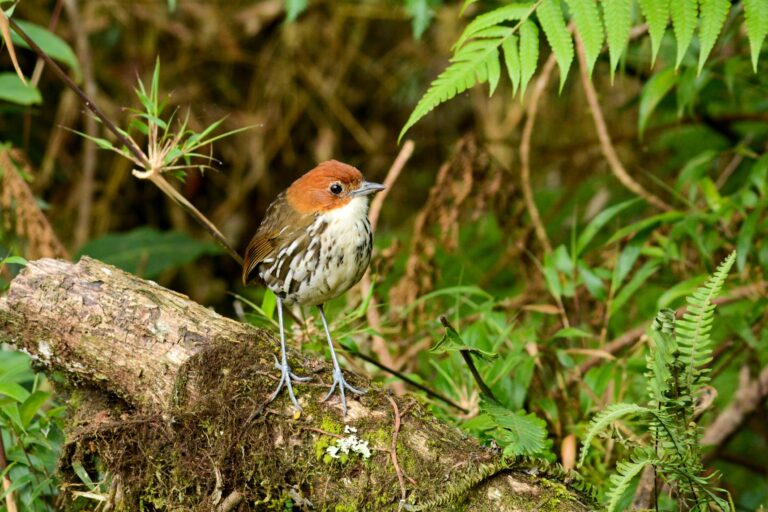
As you ascend into the Central Andes, the renowned Río Blanco Reserve presents a chance to observe elusive antpittas at feeding stations, alongside high-altitude hummingbirds and the rare Masked Saltator. The scenic Hacienda El Bosque provides exceptional close-up views of Gray-breasted Mountain-Toucan and Crescent-faced Antpitta, while the páramo ecosystem of Los Nevados National Park is home to the endemic Buffy Helmetcrest and soaring Andean Condors.
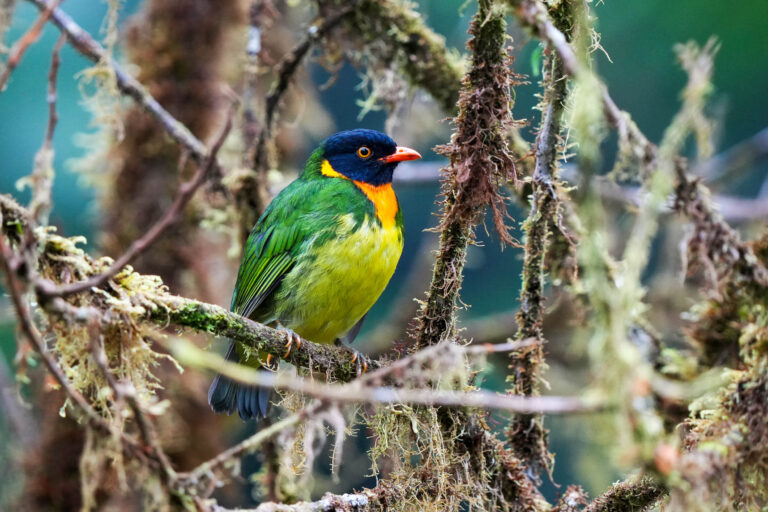
Your journey continues into the heart of Tatamá National Park, where the Montezuma Rainforest Lodge serves as a base for exploring the legendary Montezuma Road. This pristine montane forest is a stronghold for regional endemics such as the stunning Gold-ringed Tanager, Black-and-gold Tanager, and Munchique Wood-Wren. The adventure concludes with a full day in Otún Quimbaya and El Cedral, where you’ll search for the legendary Hooded Antpitta and Red-ruffed Fruitcrow amid the towering Andean forests.
This expertly crafted itinerary blends world-class birding with breathtaking scenery, excellent photographic opportunities, and comfortable accommodations. Whether you are a seasoned birder chasing lifers or a nature enthusiast eager to witness Colombia’s avian wonders, this tour promises an unforgettable journey through one of the planet’s richest birding destinations.
 Bird photo tours
 Birdwatching tours

Upon arrival in Cali, you’ll be greeted at the airport and transferred to Araucana Lodge, a serene eco-lodge nestled in the Andean foothills (approx. 2-hour drive). The lodge sits at 1,500 m (4,920 ft) in a lush premontane forest, offering fantastic feeder photography and relaxed birding on its trails.
In the afternoon, you'll explore the lodge’s grounds, where hummingbird and fruit feeders attract an incredible diversity of species. Along with common feeder birds like Crimson-backed Tanager, Scrub Tanager, Flame-rumped Tanager, and Thick-billed Euphonia, Araucana’s feeders also bring in some less-regular subjects for photography, including Lineated Woodpecker, Green Jay, and Black-winged Saltator.
We can also explore the trails surrounding the lodge for endemics like Apical Flycatcher and Grayish Piculet, while the busy hummingbird feeders attract Black-throated Mango, Steely-vented Hummingbird, Andean Emerald, and Rufous-tailed Hummingbird.
Enjoy a relaxed evening with a welcome dinner and trip briefing at the lodge.
Overnight in Birdwatcher Lodge.
Private transportation, bilingual guide, dinner, and overnight stay in a Birdwatcher Ecolodge .
After an early breakfast, we'll depart for La Florida, a mid-elevation cloud forest on the eastern slope of the Western Andes. This biodiverse zone is home to over 350 species, and active feeders ideal for bird photography and close observation. It’s a short drive from Araucana to La Florida, so we’ll bird the entrance road where there are often interesting mixed flocks before arriving at the reserve.
Key targets at La Florida include Multicolored Tanager, Chestnut Wood-Quail, Little Tinamou, Red-headed Barbet, Black-capped Tanager, and Saffron-crowned Tanager, while the forest is also home to mixed-species flocks of tanagers, warblers, woodcreepers, and more elusive species like Uniform Antshrike, Golden-winged Manakin, and Northern Chestnut-breasted Wren.
Hummingbird feeders attract White-booted Racket-tail, Crowned Woodnymph, Purple-throated Woodstar, Long-tailed Sylph, and Andean Emerald, while Andean Motmot and Crimson-rumped Toucanet can often be spotted perched around the lodge gardens.
In the late afternoon, we’ll return to Araucana Lodge for dinner.
Private transportation, bilingual guide, breakfast, lunch, dinner, and overnight stay in the same Ecolodge .
Another early departure (approx. 1-hour drive) takes us to Doña Dora, a famous family-run birding hotspot combining humid foothill forests and feeders that attract iconic Chocó biogeographic species. The key targets here are completely different to anything we’ve seen so far, and a day at Doña Dora’s place is often the highlight of the tour.
Depending on the group, we can depart a bit earlier for a short but steep hike down to an Andean Cock-of-the-rock lek, where we should be able to observe and photograph these colorful and charismatic birds at close-range. If some of the group are interested, the rest can remain at Doña Dora’s at the feeders (where you’ll be well taken care of with coffee and cheese empanadas!).
The star of the show here is the iconic Chocó endemic Toucan Barbet. This gorgeous species has taken up residence in the garden, and can often be observed at a distance of just a few meters. Feeders also attract species like Glistening-green Tanager, Black-chinned Mountain-Tanager, Spot-crowned Barbet, Scarlet-rumped Cacique, Silver-throated Tanager, and Rufous-throated Tanager.
The hummingbird feeders provide close views of Velvet-purple Coronet, Empress Brilliant, Purple-bibbed Whitetip, and Rufous-gaped Hillstar. We can also bird the roadside forests for mixed flocks and check a regular roosting spot for Lyre-tailed Nightjar.
After a full day of birding, you'll return to Araucana Lodge.
Private transportation, bilingual guide, breakfast, lunch, dinner, and overnight stay in the same Ecolodge .
Today, we venture into the heart of the humid lowland rainforest of San Cipriano, a hidden gem located about 2.5 hours from Cali. To reach the reserve, we’ll experience a unique local mode of transportation—the “brujita”, a motorbike-powered wooden cart that rides along the old railway tracks, offering a thrilling entry into the dense jungle.
San Cipriano is part of the Chocó Bioregion, one of the most biodiverse areas on Earth, characterized by its lush rainforests, fast-flowing rivers, and high annual rainfall. The combination of tropical wet forest and riparian habitats supports an incredible diversity of birds, many of which are endemic or range-restricted.
We’ll spend the day birding the roads and trails around San Cipriano, with a wealth of target species including Five-colored Barbet, Blue-whiskered Tanager, Scarlet-browed Tanager, Black-tipped Cotinga, Black-breasted Puffbird, Choco Toucan, Broad-billed Motmot, Rose-faced Parrot, Stub-tailed Antbird, Checker-throated Stipplethroat, and Spot-crowned Antvireo. The network of trails through the dense understory may reveal skulking species such as Streak-chested Antpitta, Thicket Antpitta, and the Berlepsch’s Tinamou. With over 400 species reported from the area, San Cipriano is a birding paradise.
In the late-morning, we’ll stop at a restaurant with hummingbird feeders and fruiting trees, an take some time to scan for cotingas, toucans, and fruitcrows, while enjoying views of a diverse mix of hummers including Purple-chested Hummingbird, White-tipped Sicklebill, Bronze-tailed Plumeteleer, and more.
After lunch and a rest, we’ll spend the rest of the afternoon continuing to bird the roads and trails, always hoping to run into a good mixed-flock: an active flock of lowland Pacific species in San Cipriano is another tour highlight, and can produce dozens of species.
We’ll aim to finish the day in the forest near good habitat for nocturnal species like Choco Poorwill, Choco Screech-Owl, and Crested Owl. Sometimes we’re even fortunate enough to locate roosting Uniform Crake or Olive-backed Quail-Dove.
After a full day immersed in this bird-rich rainforest, we’ll rest up in our San Cipriano hotel and enjoy dinner nearby. Based on today’s sightings, we’ll plan our second San Cipriano day with our expert local guide.
Overnight in a local Hotel
Private transportation, bilingual guide, breakfast, lunch, dinner, and overnight stay in a intermediate Hotel.
A second full day in San Cipriano allows us to explore deeper into the rainforest, increasing our chances of encountering rare and elusive species.
Today’s plan of action depends on our luck on Day 1, but other key targets here include the enigmatic Sapayoa, Semiplumbeous and Plumbeous Hawk, Saffron-headed Parrot, Rufous Mourner, Scarlet-and-white Tanager, Choco Elaenia, and many, many more!
We will hope to find an antswarm so we can enjoy one of the most remarkable birding spectacles of the neotropics, as dozens of antbirds feed around the marauding army ants. One active swarm can provide walk-away views of Spotted Antbird, Zeledon’s Antbird, Chestnut-backed Antbird, Bicolored Antbird, and Ocellated Antbird, perhaps the most beautiful antbird in the country! Woodcreepers are also well-represented, with Plain-brown, Northern Barred, and Black-striped all regularly attending swarms. Our local guide even found the near-mythical Banded Ground-Cuckoo attending a vast swarm in 2024: it’s a huge long-shot, but you never know in birding!
With another rewarding day of birding behind us, we’ll depart from San Cipriano in the mid-afternoon, arriving in the early evening for a well-earned rest at our comfortable hotel in the Heritage Town of Buga, on the banks of the Cauca River (2-hour drive). Overnight in Buga.
Private transportation, bilingual guide, breakfast, lunch, dinner, and overnight stay in a intermediate Hotel.
An early-morning departure will take us to Sonso Lagoon, a vital wetland located just outside Buga. This large marshland and dry forest ecosystem is a key site for waterbirds and regional endemics, making it an excellent location to see Horned Screamer, Spectacled Parrotlet, and all three Colombian species of whistling-duck. We also search for the endemic Apical Flycatcher and Grayish Piculet, as well as Dwarf Cuckoo, Jet Antbird, Little Cuckoo, Slate-headed Tody-Flycatcher, Bar-crested Antshrike, and other dry forest specialties. We should add many species of ducks, herons, ibis, and kingfishers to our trip list, while the dry forest is an excellent place to observe day-roosting Common Potoos and nighthawks.
After lunch in Buga, we’ll embark on a three-and-a-half-hour transfer to Manizales, climbing from the warm Cauca Valley into the cooler Andean cloud forest at 2,160 meters (7,087 feet). Upon arrival, we’ll check in to our hotel and prepare for the next day’s adventure in the famed Río Blanco Reserve. Overnight in Manizales.
Private transportation, bilingual guide, breakfast, lunch, dinner, and overnight stay in a classic Hotel.
Today we will spend a full-day at Río Blanco Reserve, a premier birding location in Colombia renowned for its diverse cloud forest avifauna and well-managed antpitta feeding stations. The reserve offers outstanding opportunities to see four species of the elusive antpitta family, including the Bicolored Antpitta, Chestnut-crowned Antpitta, Slate-crowned Antpitta, and the endemic Brown-banded Antpitta.
As well as the antpitta feeders, we can hopefully observe Black-billed Mountain-Toucan at a feeder alongside the lodge, while hummingbird feeders provide chances to spot Tourmaline Sunangel, Buff-tailed Coronet, and Long-tailed Sylph.
As we walk and drive between the antpitta feeding stations over the course of the morning (each antpitta has its feeding schedule!), we should be able to see large mixed feeding flocks, sometimes with more than 20 species! We’ll be keeping an eye out for star species like Masked Saltator, Rusty-faced Parrot, Golden-plumed Parakeet, Streak-headed Antbird, Ocellated Tapaculo, Strong-billed Woodcreeper, Dusky Piha, and Black-collared Jay. With over 550 species recorded on eBird, we’ll have plenty to keep us occupied!
After a full day immersed in the lush, bird-rich cloud forest, we’ll return to Manizales for dinner and a well-earned rest.
Overnight in the same Hotel in Manizales.
Private transportation, bilingual guide, breakfast, lunch, dinner, and overnight stay in a classic Hotel.
A pre-dawn departure brings us to Hacienda El Bosque, a high-Andean birding hotspot, renowned for its very special feeders. The misty montane forest and pastures surrounding the hacienda are home to some of Colombia's most sought-after species, including the Gray-breasted Mountain-Toucan and the enigmatic Crescent-faced Antpitta, both of which are often seen at dedicated feeding stations.
We’ll spend the morning visiting the feeding stations, observing the mountain-toucans, and both Equatorial and Crescent-faced Antpittas. Other special species coming to feeders and offering unique photo opportunities include White-browed Spinetail, Hooded Mountain-Tanager, Northern Slaty Brushfinch, Mountain Wren, and Yellow-bellied Chat-Tyrant.
The reserve’s hummingbird feeders here host high-altitude specialists such as Shining Sunbeam, Sword-billed Hummingbird, Buff-winged Starfrontlet and Mountain Velvetbreast, while the short forest trails often reveal Barred Fruiteater, Sickle-winged Guan, Andean Guan, and occasionally the elusive White-capped Tanager.
After a delicious lunch at Hacienda El Bosque, the journey continues with a one-hour transfer to Termales del Ruiz, a mountain hotel perched at 3,500 meters (11,483 feet) in the páramo ecosystem. The late afternoon provides time for both birding and relaxation, with frequent sightings of Tawny Antpitta, Scarlet-bellied and Lacrimose Mountain-Tanagers, Pale-naped Brushfinch, Golden-fronted Redstart, Blue-backed Conebill, and Golden-crowned Tanager near the lodge. We can spend our time at the hummingbird and tanager feeders, or walk the short trails around the lodge forests in search of mixed flocks.
As the evening sets in, we can unwind and relax in the natural hot springs before dinner.
Private transportation, bilingual guide, breakfast, lunch, dinner, and overnight stay in a termal Hotel.
Before breakfast, we’ll enjoy a final early-morning birding session at Termales del Ruiz, hoping to observe the striking high-altitude hummingbirds that thrive in the páramo, including the Buff-winged Starfrontlet, Rainbow-bearded Thornbill, and Golden-breasted Puffleg. These hardy species, adapted to the extreme conditions, provide unforgettable sightings, sometimes even feeding from our hands!
After check-out, the journey continues to Brisas, the entrance to Los Nevados National Park. At an elevation of 3,800 to 4,200 meters (12,467–13,780 feet), this stark and breathtaking páramo landscape is home to the Buffy Helmetcrest, an endemic hummingbird that relies on Espeletia plants for nectar. Careful searching may also reveal other páramo specialists such as the Many-striped Canastero, Stout-billed Cinclodes, and Andean Tit-Spinetail, while raptors like the Andean Condor and Black-chested Buzzard-Eagle patrol the skies.
By mid-afternoon, we’ll begin our transfer to Montezuma Lodge, transitioning from the páramo into lush Western Andean cloud forest over the course of the four-hour drive.
Overnight at Montezuma Lodge.
Private transportation, bilingual guide, breakfast, lunch, dinner, and overnight stay in a standard Lodge.
Montezuma Lodge is a rustic yet comfortable eco-lodge on the edge of Tatamá National Park, ideally situated for birding excursions into the pristine montane forests that surround it. The lodge’s feeders attract a stunning array of hummingbirds, while the nearby forest edges are alive with tanagers and flycatchers.
Tatamá National Park is a paradise for birders, encompassing vast tracts of cloud forest that host numerous regional endemics. An early morning 4x4 vehicle ascent takes us to the higher elevations of the Montezuma Road, where we will gradually bird our way down through different altitudinal zones. This area is particularly renowned for its range-restricted tanagers, including the stunning Gold-ringed Tanager and the equally dazzling Black-and-gold Tanager.
Throughout the day, we will search for other key targets such as Chestnut-bellied Flowerpiercer, Munchique Wood-Wren, and Fulvous-dotted Treerunner. Hummingbird feeders along the route provide excellent chances to observe species such as Empress Brilliant, White-tailed Hillstar, and Violet-tailed Sylph. With luck, we might even spot a rare Ocellated Tapaculo skulking in the undergrowth. As we descend, the diversity of birdlife increases even further, offering a wealth of photographic opportunities.
Overnight at the same Lodge.
Private transportation, bilingual guide, breakfast, lunch, dinner, and overnight stay in a standard Lodge.
A second full day in Montezuma allows for a more relaxed and in-depth exploration of the park’s spectacular birdlife. With an early start, we will revisit different elevations to maximize our chances of encountering elusive species such as Tanager Finch, Beautiful Jay, and the secretive Cloud-forest Pygmy-Owl. We may even be lucky enough to add White-faced Nunbird or Greater Scythebill to our life lists!
We will also focus on locating more members of the incredible mixed-species flocks that move through the forest, which may include Orange-breasted Fruiteater, Golden-collared Honeycreeper, and Yellow-collared Chlorophonia. In the understorey, we may spot shy birds like the Chami Antpitta, Yellow-breasted Antpitta, Bicolored Antvireo and Choco Brushfinch. After another rewarding day of birding, we’ll return to the lodge to enjoy another evening in this remarkable location.
Overnight at the same Lodge.
Private transportation, bilingual guide, breakfast, lunch, dinner, and overnight stay in a standard Lodge.
Well-over 500 species have been recorded along the Montezuma Road, so a third day here is no chore! Our plans for today depend entirely on our success on the previous birding excursions. However, if we’re satisfied with our higher-altitude sightings, we can focus our birding today on the lower section of the road, and around the lodge gardens and hummingbird feeders. These extremely active feeding stations attract almost 20 different species, including Green Thorntail, Rufous-gaped Hillstar, Purple-bibbed Whitetip, Violet-tailed Sylph, White-whiskered and Tawny-bellied Hermit, and Green-crowned Brilliant.
Last overnight at Montezuma Lodge.
Private transportation, bilingual guide, breakfast, lunch, dinner, and overnight stay in a standard Lodge.
After an early morning birding session around the lodge, where we have another chance to see species that may have eluded us, we’ll begin our journey back towards Pereira.
We should arrive on the outskirts of Pereira by lunchtime. After a local lunch, we’ll spend the afternoon birding an excellent new dry forest site just outside the city: Kaukitá. This reserve has many of the same localized dry forest specialties as Sonso, so we’ll have a good chance to catch up with anything we missed there while enjoying some laid-back birding after a few intense days at Montezuma.
By late afternoon, we arrive in Pereira, where we check into our hotel and relax after an eventful few days in Montezuma.
Overnight in Pereira.
Private transportation, bilingual guide, breakfast, lunch, dinner, and overnight stay in a cñassic Hotel.
Today, we will explore two exceptional birding hotspots: Otún Quimbaya Flora and Fauna Sanctuary and El Cedral. These lush montane forests, located on the western slope of the Central Andes, provide habitat for a rich diversity of Andean birds, including some very localized specialties.
Otún Quimbaya is particularly famous for its healthy population of the endemic Cauca Guan, often seen foraging in the trees near the roadside. The sanctuary is also home to the striking Red-ruffed Fruitcrow, which can sometimes be found perched conspicuously along the road.
Our first stop will be the farthest point of the road at El Cedral, where we will search for the legendary Hooded Antpitta, a species barely known to birders and scientists until a population was rediscovered in this area about a decade ago. It’s a tricky bird, but by arriving at first light we’ll maximise our chances of spotting it. If we’re really lucky, we may even chance upon a Mountain Tapir feeding in the roadside vegetation.
Over the course of the day, we’ll slowly bird our way down the road from El Cedral back towards Otún Quimbaya. Mixed flocks here can yield many species of tanagers, tyrannulets, and woodpeckers, and Howler Monkeys are also regularly encountered.
As the day draws to a close, we return to Pereira for our final overnight stay. En route, we’ll make a stop to scan for Torrent Ducks along the river.
It’s the last night of the tour, so tonight we’ll enjoy a farewell dinner in Pereira.
Overnight at the same Hotel in Pereira.
Private transportation, bilingual guide, breakfast, lunch, dinner, and overnight stay in a cñassic Hotel.

After breakfast, we transfer to Matecaña International Airport in Pereira for departing flights. Depending on flight schedules, there may be time for some final birding at a nearby site. This marks the conclusion of an unforgettable birding adventure through Colombia.
Private transportation, bilingual guide, breakfast.
Itinerary - Prices and dates of upcoming departures
NB: 2028 prices are indicative estimates based on projected annual increases and may be subject to change.
| Prices and departure dates | 2 travellers | 4 travellers | 6 travellers | 8 travellers |
|---|---|---|---|---|
Prices 2026 | - | 5 390 USD | 4 390 USD | 3 770 USD |
Prices 2027 | - | 5 767 USD | 4 697 USD | 4 034 USD |
Prices 2028 | - | 6 171 USD | 5 026 USD | 4 316 USD |
Are you a group of travellers looking for a special price, a specific departure date, or would you like to change this itinerary?
Customise this trip Contact usIncluded
Not included
Payment and reservation terms
To book your tour, please confirm your agreement in writing to your travel expert.
The agency declines all responsibility for the execution of the confirmed services in case of non-compliance with the above payment terms.
Cancelation terms
All cancellations must be submitted in writing, clearly indicating the booking reference of the trip to be canceled.
For any cancellation made more than 90 days before the start of the trip, a 10% penalty of the total trip cost (excluding internal flights) will apply, plus 100% of the flight costs, with a minimum fee of USD 200.
For cancellations made between 90 and 46 days before the start of the trip, a 30% penalty of the total trip cost (excluding internal flights) will apply, plus 100% of the flight costs.
For cancellations made between 45 and 31 days before the start of the trip, a 50% penalty of the total trip cost (excluding internal flights) will apply, plus 100% of the flight costs.
For cancellations made between 30 and 8 days before the start of the trip, a 80% penalty of the total trip cost (excluding internal flights) will apply, plus 100% of the flight costs.
For cancellations made less than 8 days before arrival in Ecuador, a 100% penalty of the total trip cost per person will apply.
In the case of a cancellation by one participant on a group trip, the final trip price for the remaining participants will be adjusted proportionally according to the new number of confirmed travelers. Depending on the reason for the cancellation, the agency will make every effort to minimize the financial impact of the situation.
Important note
Itineraries may be subject to last minute changes due to natural disasters or changes in domestic legislation. The visitor must take into account and accept the possibility of last minute changes in the organisation of the trip. The operator therefore reserves the right to make any changes necessary to ensure the safety and integrity of the travellers and to comply with the laws in force. The hotels are given as an indication subject to availability at the time of booking the tour. In case of unavailability, a hotel of the same category will be proposed.
Formalities
Passport valid 6 months after your return date. No visa is required at this time for Colombia.
Vaccinations: Yellow fever vaccinations are compulsory from may 2025, we advise you to consider those against tetanus and hepatitis A and B as recommend.
We recommend that you consult your doctor before departure and that you take out insurance to cover medical expenses and repatriation.
ABOUT COLOMBIA
Your guide for this trip

Chris Bell


Chris has been passionate about birds and nature since his childhood in rural Shropshire, UK. After seeing his first Andean Cock-of-the-rock in Ecuador in 2007, he fell in love with South America and hasn’t looked back. He has spent the past 12 years exploring and birding the continent, with a year in Venezuela, over a decade in Colombia, and a year of backpack birding and tour scouting through Argentina, Chile, Bolivia, and Brazil. Chris is a native English speaker, fluent in Spanish, and is passionate about exploring new birding destinations in South America.
Characteristics of the trip
Travel theme |
Birdwatching and photography trip |
|---|---|
Accompaniment |
Specialised bilingual guide |
Group |
From 2 to 8 passengers |
Arrival city |
Cali |
Departure city |
Pereira |
Food |
Local and family cuisine |
Accommodation |
Charming Hotels, Lodges and Rustics Reserve |
Transport |
Private |
Physical condition |
Easy to moderate |
Best season |
Trips can be arranged all year round, from January to December. The dry season goes from May to September. |
Other trips that may interest you
Harpy Eagle Tour: From Colombian Cloud Forest to the Macarena

Come face-to-face with a wild Harpy Eagle family at an active nest, then explore Colombia’s spectacular Andes, cloud forests, and Eastern Plains in search of some of the continent’s most remarkable birds.


Inírida
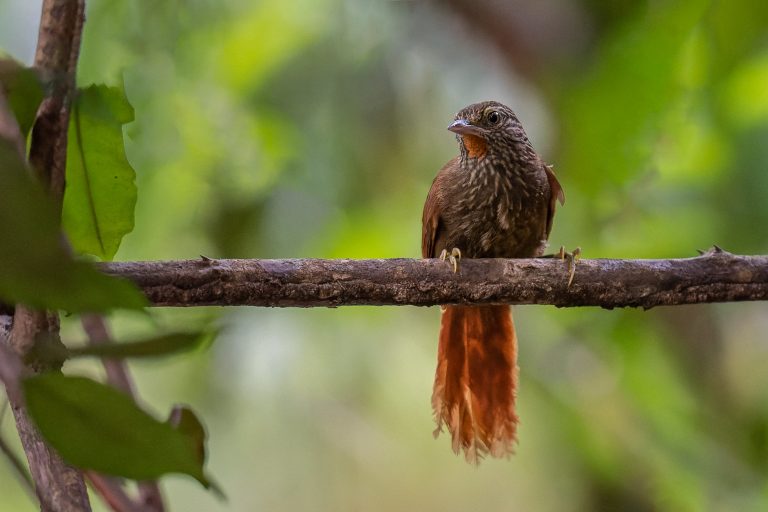
Considered one of the ultimate birdwatching destinations in Colombia, Inírida is strategically located at the confluence of three of the world's richest biodiversity regions: the Orinoco region, the Amazon, and the Guiana Shield. This mosaic of ecosystems is key to understanding the immense avian diversity in Inírida, where white-sand forest specialists are the undisputed stars.
The Northern Colombia Birding Trail

Explore Colombia’s wild north: Perijá endemics, Guajira desert birds, and Santa Marta specialties in one spectacular birding adventure.
Wild Llanos: Birds, Giant Anteaters, and Anacondas

Discover Colombia’s wild Llanos: a birding & photo safari adventure in Colombia, with magical scenery, unique culture, and unforgettable wildlife encounters
Receive our brochure

Customize your trip